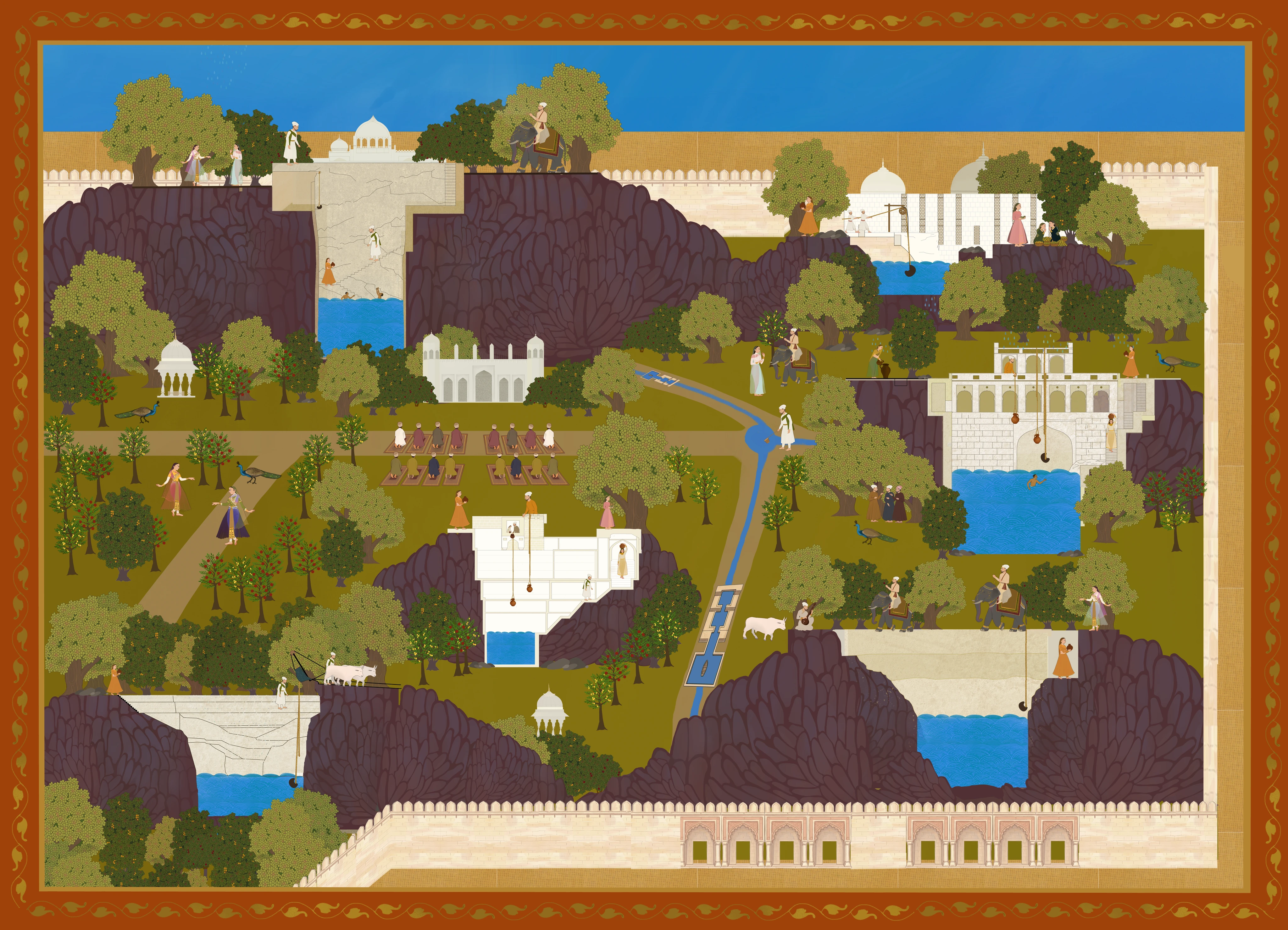

The Qutb Shahi Baoli — Water in the City of the Dead
AFREEN FATIMA & ADITI
At the height of Qutb Shahi rule, the necropolis at the foothills of Golconda functioned less as a static rauza — the Persianate garden-tomb, the form Ibrahim Rauza in neighbouring Bijapur made famous across the Deccan — and more as an operating civic-ecological system: a small water-fed city built to serve the dead, the living, and everything growing between them. If the dome announced sovereignty upward, the baoli secured it downward. Six wells were sunk into the bedrock not as afterthoughts to the tombs but as their precondition — no baoli, no orchard; no orchard, no shade, no fruit, no birdsong, no paradise made legible in stone and leaf. Around each well, a distinct social and ecological life organised itself, held together by fārz — the customary, unwritten obligation of upkeep — long before any inscription named the duty. This is Traditional Ecological Knowledge in its original form: not written down, but encoded in the pitch of a ramp, the depth of a landing, the species chosen for a grove.