A Dam by the Pillow, Yet a Dry Throat!
धरणा उशाला ती कोराड घशाला!
Abhishek Salve
Set against the semi-arid landscape of the Deccan Plateau in Maharashtra, the neighboring villages of Wawarath and Jambhali, in the district of Ahilyanagar, share a deep bond with the Mula River and its dam reservoir. Here, undulating terrains meet a significantly delicate balance of agriculture, grazing lands, and forest cover, all shaped by the cadence of the monsoons. Changing rainfall, shifting land use, and the legacy of the Mula Dam have, perhaps irreparably, transformed the local environment, testing the resilience of the region’s farming, pastoral, and tribal communities.
As these villages navigate ecological change, they tell a compelling story of human adaptation, one that is a testament to how local communities continue to sustain their traditional connections to land, water, and forest resources in this changing world.
Explore the sculptures
Ahilyanagar is a district caught in a paradox where even though major rivers like the Godavari, Bhima, and Mula traverse these lands, its 14 tehsils and over 1,600 villages live in the shadows of scarcity. The region's semi-arid climate relies heavily on the southwest monsoon, but a 20-year trend reveals that rainfall has plummeted 55% below normal. With minimal forest cover of 7.6% and a cultivable area of 8.2%, groundwater levels are continuously depleting, and moderate droughts frequent the land. Water here exists as both presence and absence, visible in reservoirs and dams, yet frustratingly distant from everyday life.
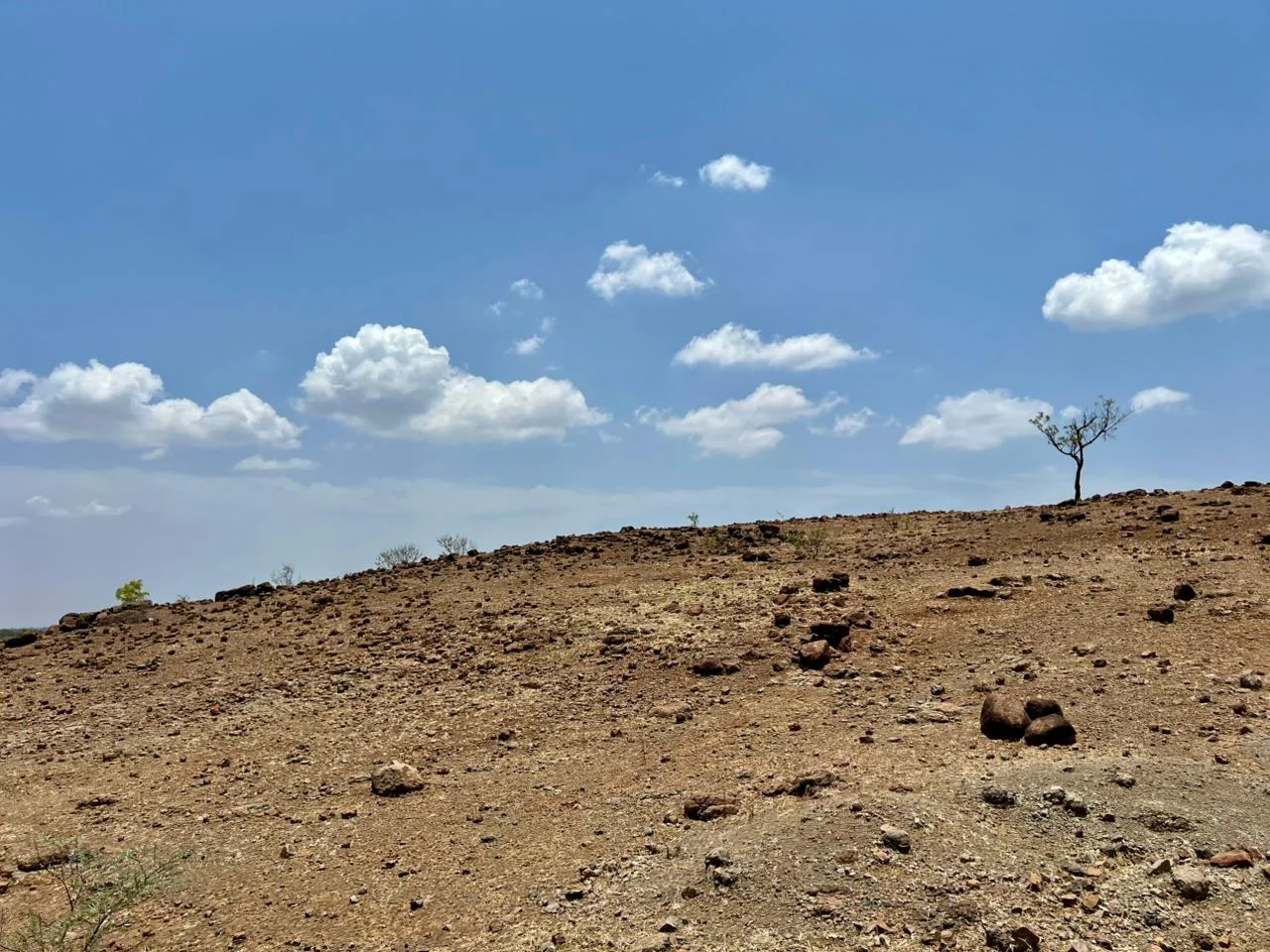
Right in the catchment area of the Mula River, Warwath and Jambhali live entirely in the shadow of the reservoir. The water changes everything here—the backwaters swallowed old pathways and farming grounds years ago, creating a completely different shoreline where dry earth meets deep water. The trouble, however, is with how unpredictable the rain has become. Everything in this region depends on the southwest monsoon, but the rains are shrinking, and the dry spells are stretching out. Because of this, the reservoir levels and the groundwater are consistently depleting. As the rhythms of the river basin shift, the communities here find themselves dealing firsthand with the consequences of an altered landscape and a water system that's increasingly hard to rely on.
The construction of the Mula Dam transformed parts of the original landscape by creating reservoir backwaters and altering traditional land-use patterns. At the same time, the reservoir and surrounding forests have become significant ecological and socio-economic resources for local communities. The geographical setting of Wawarath and Jambhali—dam reservoir influence, agricultural activity, and pastoral land use—makes them important sites for studying environmental change, human–nature relationships, and the livelihoods of pastoral and tribal communities in western Maharashtra. These villages provide valuable insights into how local populations adapt to ecological transformations while maintaining traditional connections to land, water, and forest resources.
KEEPERS OF THE MOVABLE LANDSCAPE
This research emerges directly from the ecological and social landscape of Wawarath and Jambhali, a region marked by drought, declining groundwater, erratic rainfall, and the slow disappearance of pastoral ecologies. The inquiry focuses on pastoral communities of the Dhangar, Ramoshi, and Gawli, whose lives have historically evolved through movement, seasonal migration, grazing knowledge, and close relationships with animals and land. Their understanding of ecology is inherited through practice rather than documentation, carried through routes, memory, labour, and oral transmission. Livestock are not simply economic assets but extensions of kinship, continuity, and survival.
However, this relationship between humans, animals, and landscape is increasingly destabilized. Expanding infrastructure, altered water systems, industrial agriculture, and urban growth have begun to fragment the geographies that once sustained pastoral movement. Grazing lands have shrunk, water
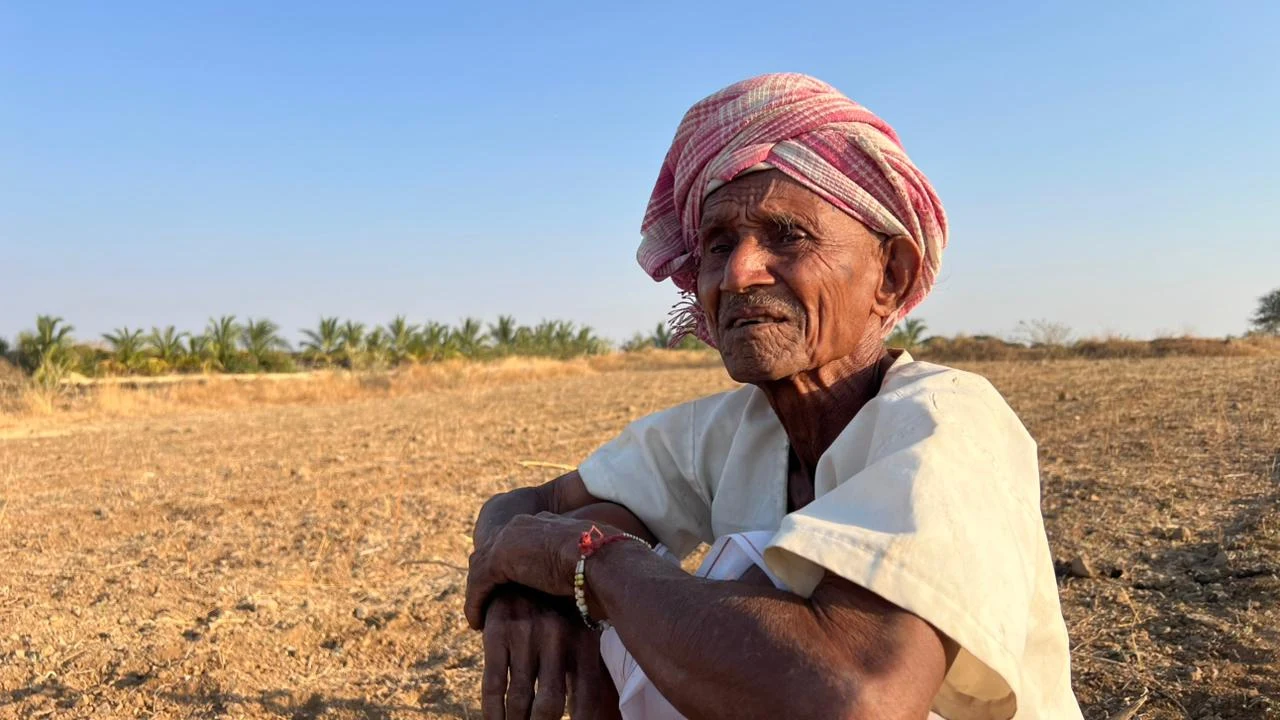
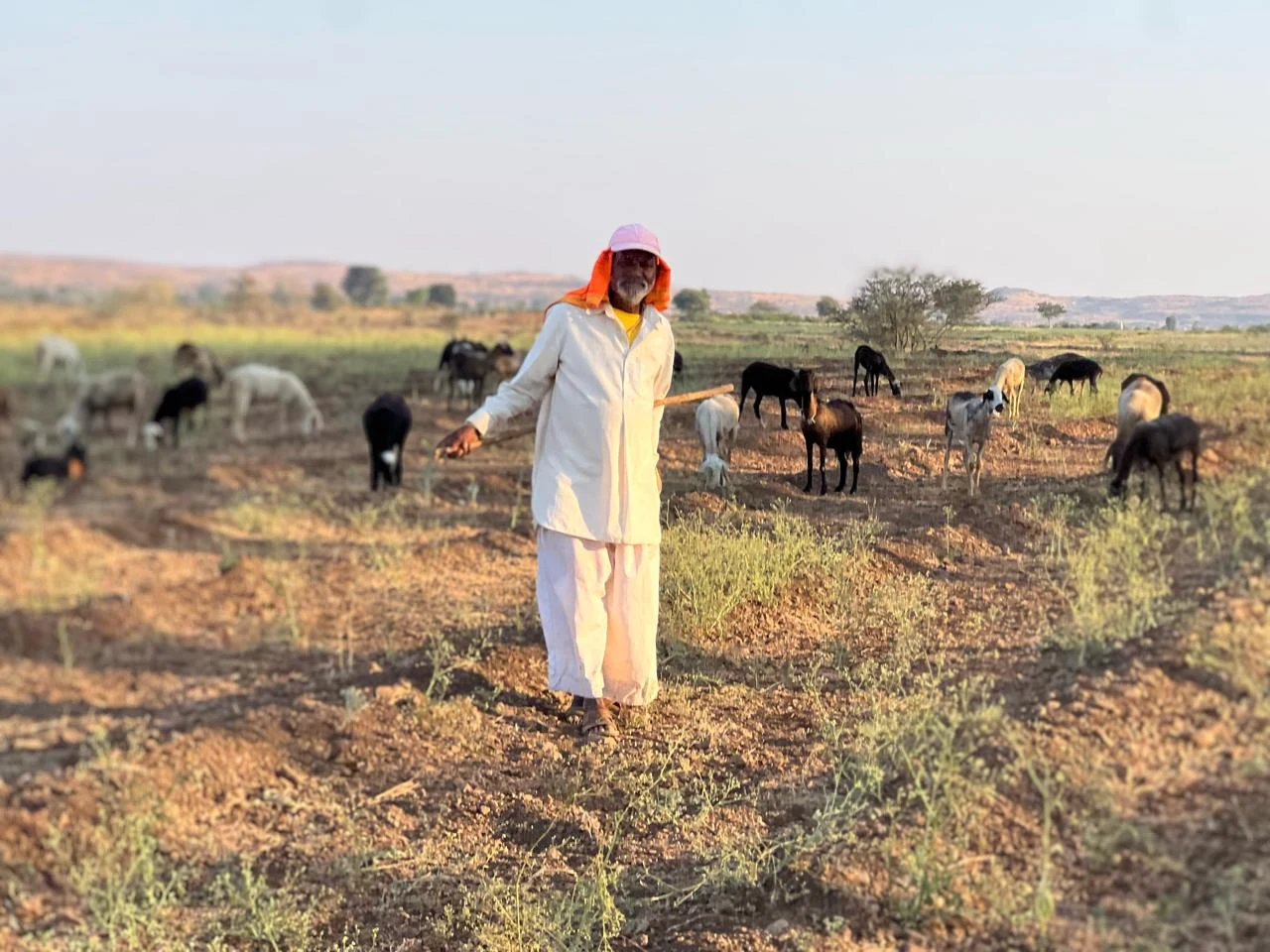
One of the central tensions within this landscape is the paradox of water. Under the government’s Jal Jeevan Pani Yojana, promises of household water access were made across rural regions. However, access to these systems remains uneven. Families capable of bearing installation and associated costs receive connections, while economically vulnerable pastoral households continue to remain excluded. As a result, women from these communities often walk to houses with water access to request water for daily use. The quantity they receive is rarely sufficient for an entire family, forcing many women to walk distances of four to eight kilometres every day to collect water.
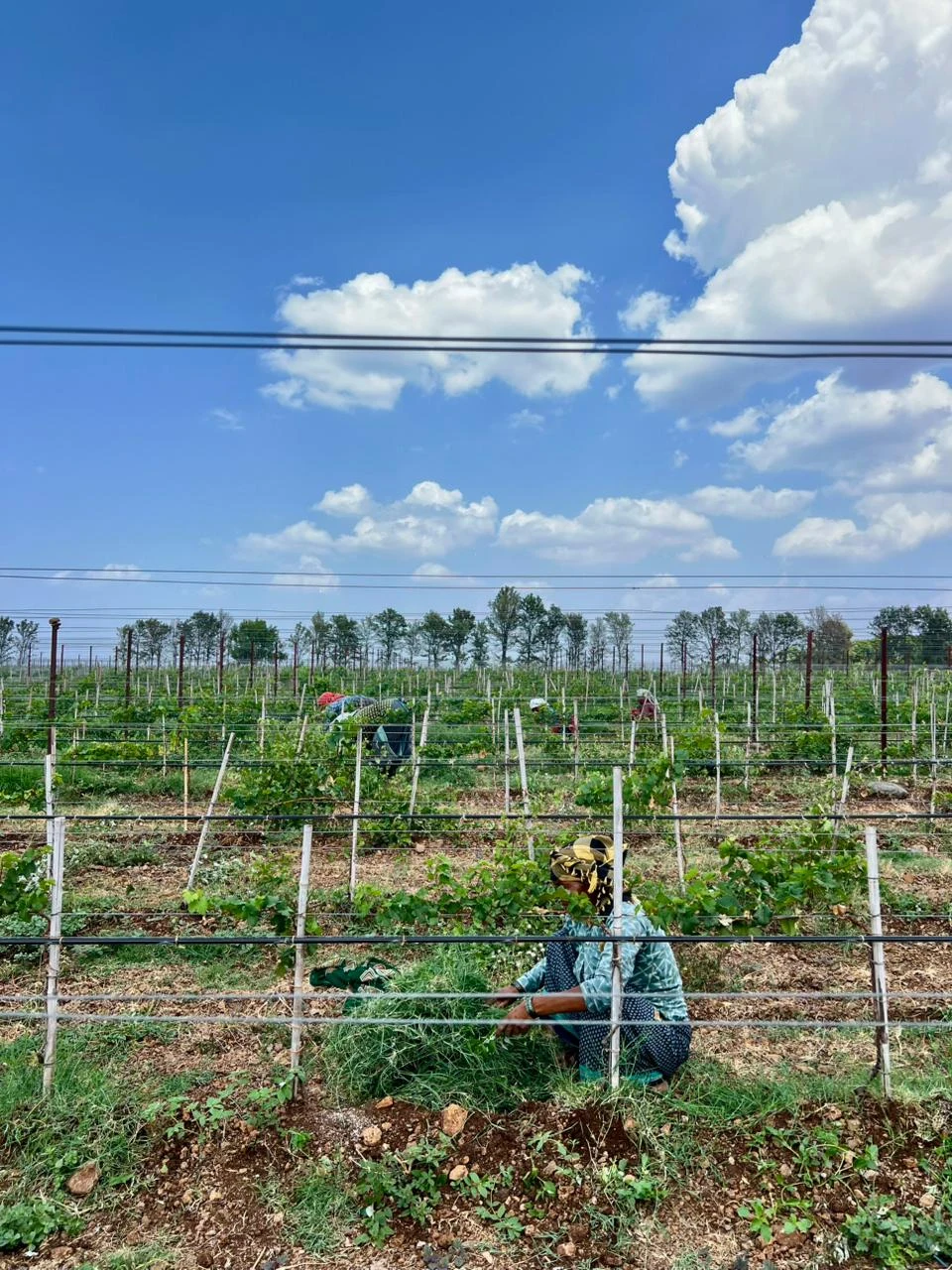
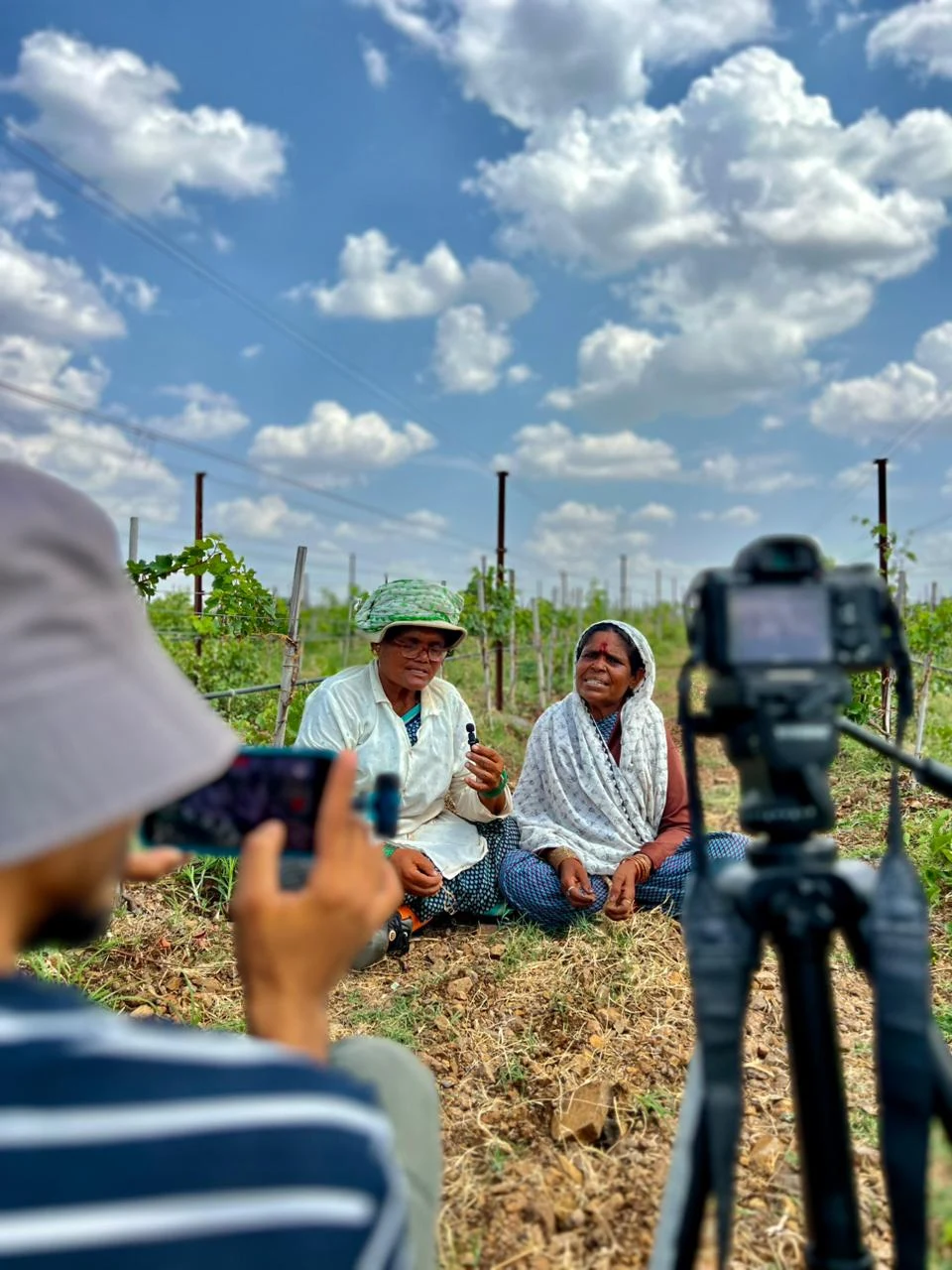
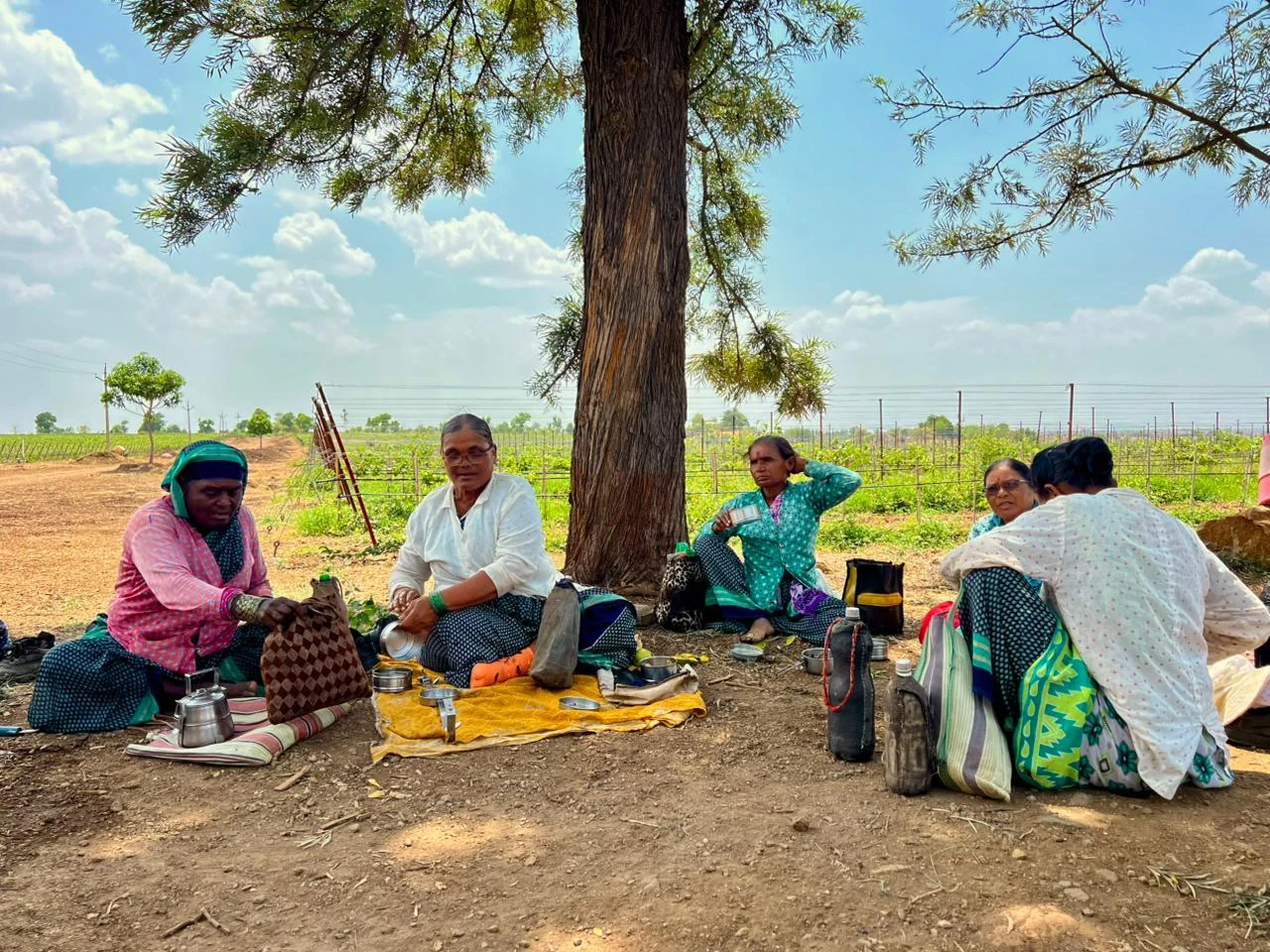
Over time, this repetitive physical act transforms into an invisible labour structure embedded within the female body. Water collection is more than a daily chore; it is an invisible physical endurance shaped by inequality and geography, where extreme scarcity becomes so normal that people reorganize their entire lives around deprivation.
Economic survival is equally tied to caste and changing industries. Many pastoral families depend on agricultural work in farms owned largely by Scheduled Caste communities in the region. However, while older generations hold onto herding, younger people are now inclined to farm labor or toward vineyards and factory jobs, trading the deep uncertainties of pastoral life for the seemingly steady income of wage work.
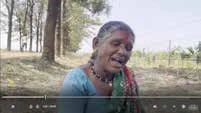
For many women, this transition carries a different emotional urgency. Beyond survival, there exists a desire for stability — to earn consistently, settle permanently, and escape the relentless physical exhaustion of everyday scarcity. The aspiration is not necessarily urban luxury, but relief from continuous uncertainty.
At the same time, healthcare infrastructure within these villages remains critically fragile. Government awareness drives addressing menstruation, hygiene, nutrition, and women’s health periodically reach these regions, yet practical medical support remains deeply inadequate. A single local clinic and doctor’s cabin often serve multiple villages simultaneously. During serious illnesses, pregnancy complications, or childbirth, families must undertake journeys lasting nearly two hours to reach a government hospital. In many cases, this journey includes crossing the Mula Dam by boat before accessing road transport.
This delay between crisis and treatment has devastating consequences. Several maternal deaths have occurred over recent years because emergency healthcare remains geographically and economically inaccessible. The landscape itself becomes part of this violence — distance, water bodies, lack of roads, and absence of infrastructure collectively shaping conditions of survival and death.
Education for girls is heavily constrained, with most families limited to basic schooling through the village Zilla Parishad, while higher education remains rare and is usually cut short by early marriage. Yet, despite these structural hurdles, women find subtle ways to negotiate agency and forge internal solidarity. Widowed women, for instance, are not isolated by the community; instead, if they choose to work and support themselves, they are met with support, complicating simplified narratives of victimhood.
This resilience reflects a larger global condition of pastoralism. Across regions such as Ladakh, Bhuj, Jaisalmer, Tibet, and Mongolia, pastoral communities have historically survived within harsh ecologies through mobility, ecological sensitivity, and collective adaptation.
As an artistic inquiry, this research does not seek to frame pastoral communities as passive victims of environmental decline. Instead, it attempts to acknowledge their endurance, knowledge systems, and continuing negotiations with a rapidly transforming world. The work reflects on how landscapes absorb political decisions, infrastructural inequalities, caste structures, climate instability, and aspirations for dignity.
THE QUESTIONS THAT REMAIN
Ultimately, this research asks what happens when communities closest to land and water become the ones most excluded from them. How does scarcity reshape memory, labor, gender, and belonging, and how do pastoral communities continue to carry forward cultural identity and ecological wisdom while existing within systems that repeatedly push them toward invisibility?
This artistic exercise seeks to position pastoral life not as a disappearing past, but as a living, adaptive, and politically significant presence that continues to endure within fractured landscapes shaped by climate change, development, and unequal access to resources.
Witnesses
Medium: Aluminium, digital video / Size: 1 × 24 × 36 inches
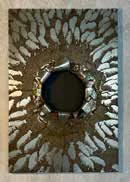
This installation emerges from my research with pastoral communities in Ahilyanagar and from conversations with shepherds and livestock keepers about their lives, memories, and experiences of a changing landscape. Through these encounters, I became interested in the ways people, animals, and land remain deeply interconnected, even as the environments that sustain them transform.
The work consists of an etched image on a construction metal plate, a material closely associated with development and the reshaping of land. At its centre is a large crater, as though the ground has been violently opened. Surrounding it, a flock of sheep gathers at its edge, collectively looking into the void. Behind the plate, a video composed of interviews with members of pastoral communities is projected. Their voices emerge from the darkness behind the image, creating a space where memory, testimony, and landscape converge. I imagine the sheep standing around the crater, listening to the voices of the people who have cared for them across generations.
The crater functions as both a physical and symbolic form. It speaks of absence, loss, and the disruptions taking place within pastoral environments, where grazing lands are shrinking, migration routes are changing, and traditional livelihoods face increasing uncertainty. By using a construction plate, the work draws attention to processes of development and expansion while questioning what becomes of the people, animals, and histories embedded within these transforming terrains.
Rather than documenting a specific event, the installation creates a poetic space in which voices, animals, and landscape intersect. The sheep become more than subjects; they act as witnesses, quietly gathered around a site filled with stories, memories, and traces of the land. Through this work, I reflect on endurance, coexistence, and the shared experience of living through environmental and social change.
Survival Exercise
Medium: XYZ / Size: XYZ inches
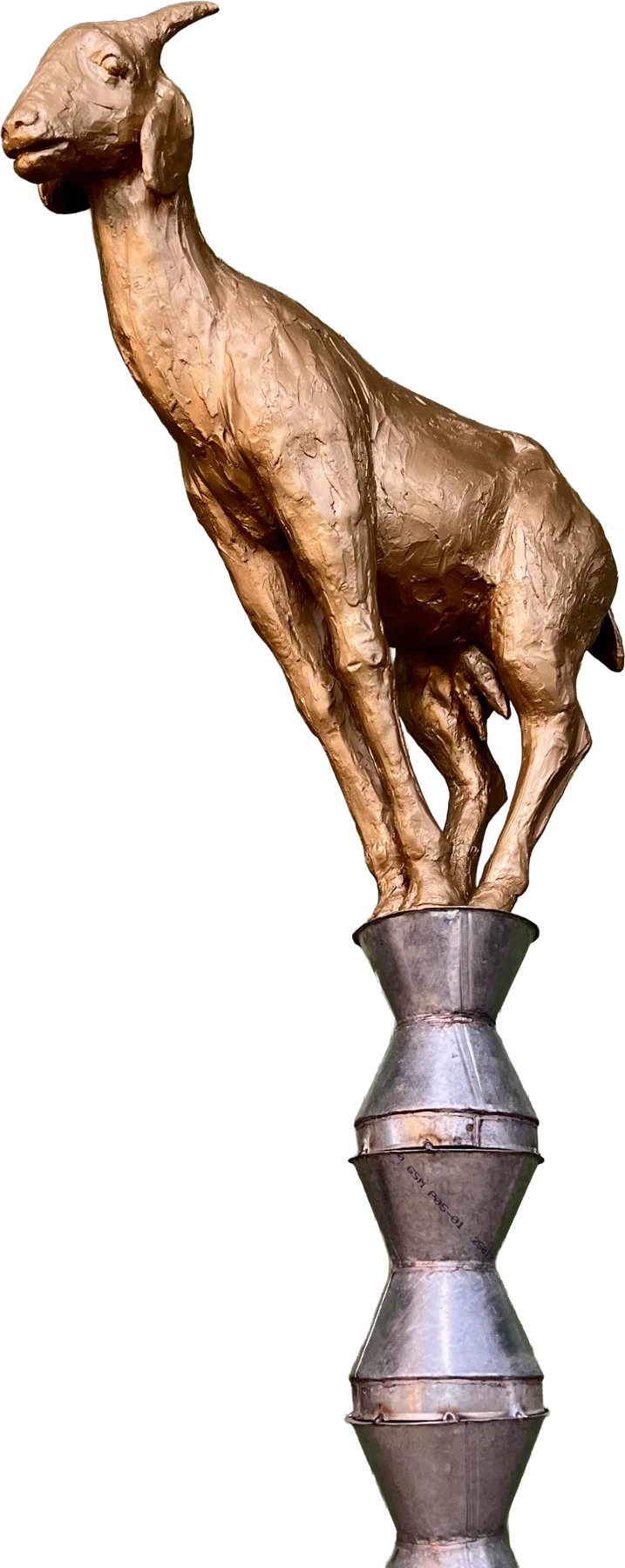
This sculpture emerges from memories of my childhood and the rural landscape in which I grew up. Animals, grain-measuring vessels, and water containers were an integral part of everyday life. Over time, I came to recognize these familiar objects as symbols of labour, sustenance, and the interconnected relationship between people, animals, and their environment.
The work depicts a goat balancing atop a vertical column of traditional grain-measuring vessels stacked upside down. The precarious structure suggests fragility and uncertainty, while the goat evokes the image of a performing animal compelled to maintain balance in order to survive. This image serves as a metaphor for the conditions of survival experienced by rural communities, where people and livestock alike depend on increasingly uncertain resources such as water, food, and land.
The grain-measuring vessels symbolize food, livelihood, and the rural economy. By inverting and stacking them into a fragile tower, the work points to the instability that often underlies systems of sustenance. The goat becomes a symbol of endurance and vulnerability, embodying the persistent effort required to maintain equilibrium amidst precarious circumstances.
Through this sculpture, I reflect on survival as an ongoing act of balance. While rooted in personal memory and rural experience, the work extends beyond the figure of the animal to address broader questions of resilience, uncertainty, and the human condition. It speaks to the quiet strength that enables individuals and communities to endure despite the fragility of the structures that support their lives.