
Cascading Lakes of Nagpur: Water, Landscape, and the Formation of the City
REEWENA JOHN
Chronicles of Nagpur stress more on the Bhosle rulers, the Zero Mile Stone, or the city's emergence as a major administrative and commercial centre. But beneath this history lies another system that has quietly shaped the city: WATER.
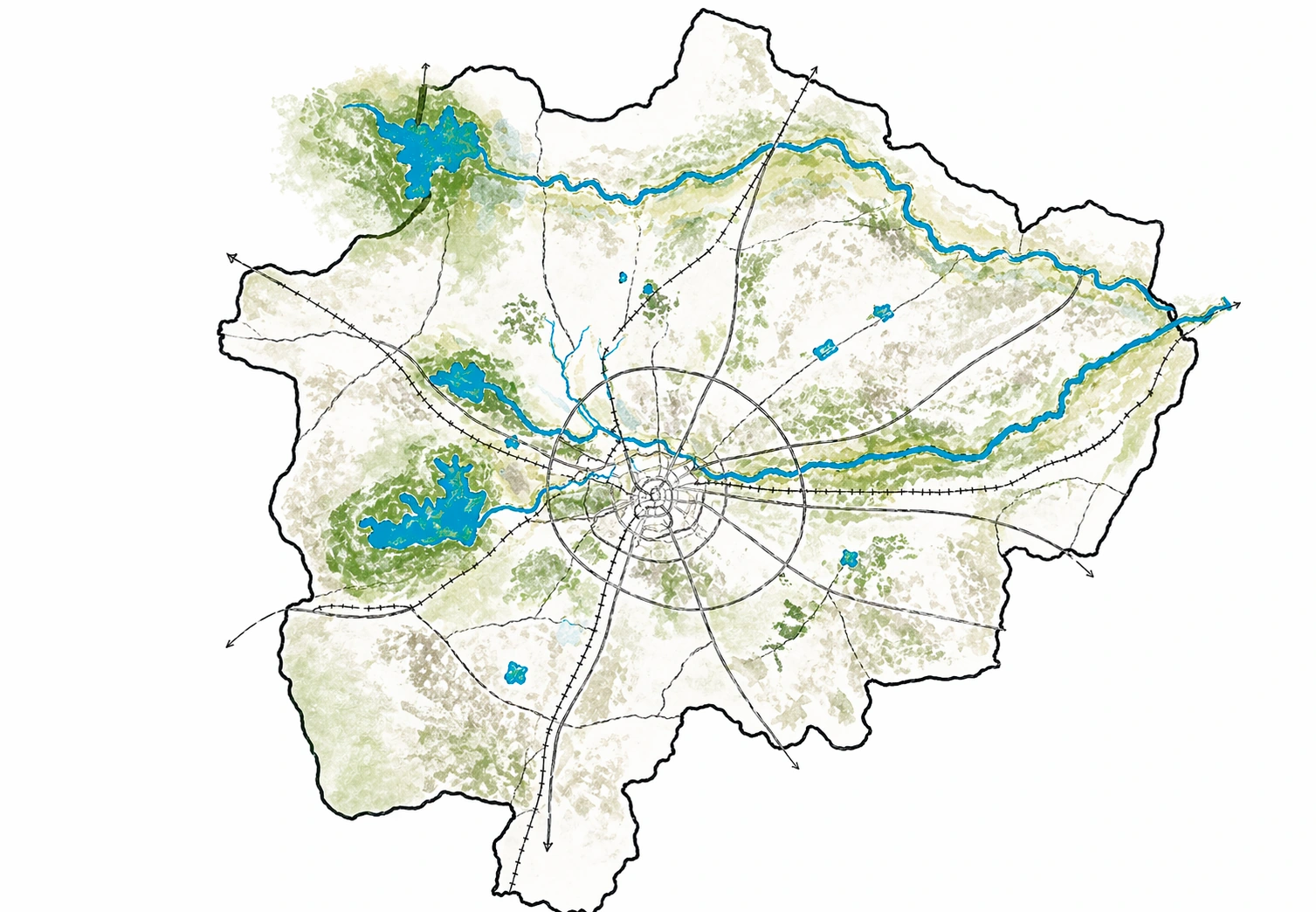
The landscape of Nagpur is marked by a network of lakes, seasonal streams, natural depressions, drainage channels, and watersheds that respond to the region’s monsoon and topography. The lakes of Nagpur did not exist as isolated water bodies. They were part of a larger cascading water system. Lakes such as Ambazari, Futala, and Gorewada are therefore more than individual landmarks. They are parts of a larger hydrological landscape. Each lake has developed its own relationship with the city, its people, and its surrounding ecology, while still being connected through the movement of water.Historically, this water system was closely connected to everyday life. Water was collected, carried, washed in, worshipped, shared, and lived with. The edges of the lakes were places where people gathered and moved, and where seasonal changes, vegetation, animals, and water came together.As the city expanded, however, this relationship began to change. Roads, construction, boundaries, Metro lines and encroachment have gradually fragmented the edges of the lakes. The distance between people and water has increased. A lake that was once experienced as a part of everyday life is now often seen as an isolated urban object.
Instead of looking at these lakes only through maps, data, or architectural form, this project tries to understand them through rain, movement, memory, sound, reflection, absence, and human experience. The poem becomes a way of observing the landscape as something that is constantly changing with every rainfall, every season, and every human intervention.
Through the poem, the hydrological system becomes a story of the city. It moves between past and present, presence and absence, connection and separation. It looks beyond the visible lake and tries to recognise the larger system beneath it the rain, the watershed, the soil, the seasonal flow, the people, and the memories carried by water.
पाण्याचा मार्ग कोणी शिकवत नाही; ते स्वतःच वाट शोधत जाते ।
No one teaches water its path; it finds its own way.
अंबाझरीच्या काठावर माती ओलसर होती, पावसाच्या आधीच जमीन पाण्याची वाट पाहत होती। दगडी बांधाच्या सावलीत स्त्रिया घागरी घेऊन येत, पाणी हे साधन नव्हतं— ते रोजच्या जगण्याचं शरीर होतं।
The name Ambazari is derived from the Marathi word "Amba" (आंबा), referring to the mango groves that once flourished around the lake. Constructed by the Bhosle rulers in 1870, Ambazari Lake is the largest and one of the most historically significant lakes in Nagpur. The reservoir was created by building an earthen bund across a natural valley, enabling it to capture monsoon runoff from the extensive western catchment. Designed primarily for water storage, it supplied water for domestic use, irrigation, and agriculture, serving as a vital resource long before the establishment of modern municipal water systems. The lake's construction reflects a sophisticated understanding of the region's terrain, rainfall patterns, and watershed dynamics, demonstrating how traditional engineering worked in harmony with the natural landscape. The earthen embankment retained large volumes of seasonal rainfall, while carefully designed overflow structures safely released excess water downstream without damaging the reservoir. During periods of heavy monsoon, this overflow formed the headwaters of the Nag River, directly connecting Ambazari to Nagpur's wider hydrological network.Basalt retaining walls protected vulnerable sections of the embankment from erosion, while stone ghats provided access for water collection, bathing, washing clothes, and other everyday activities. These engineering interventions not only ensured the durability of the reservoir but also integrated it into the daily life of the surrounding communities.
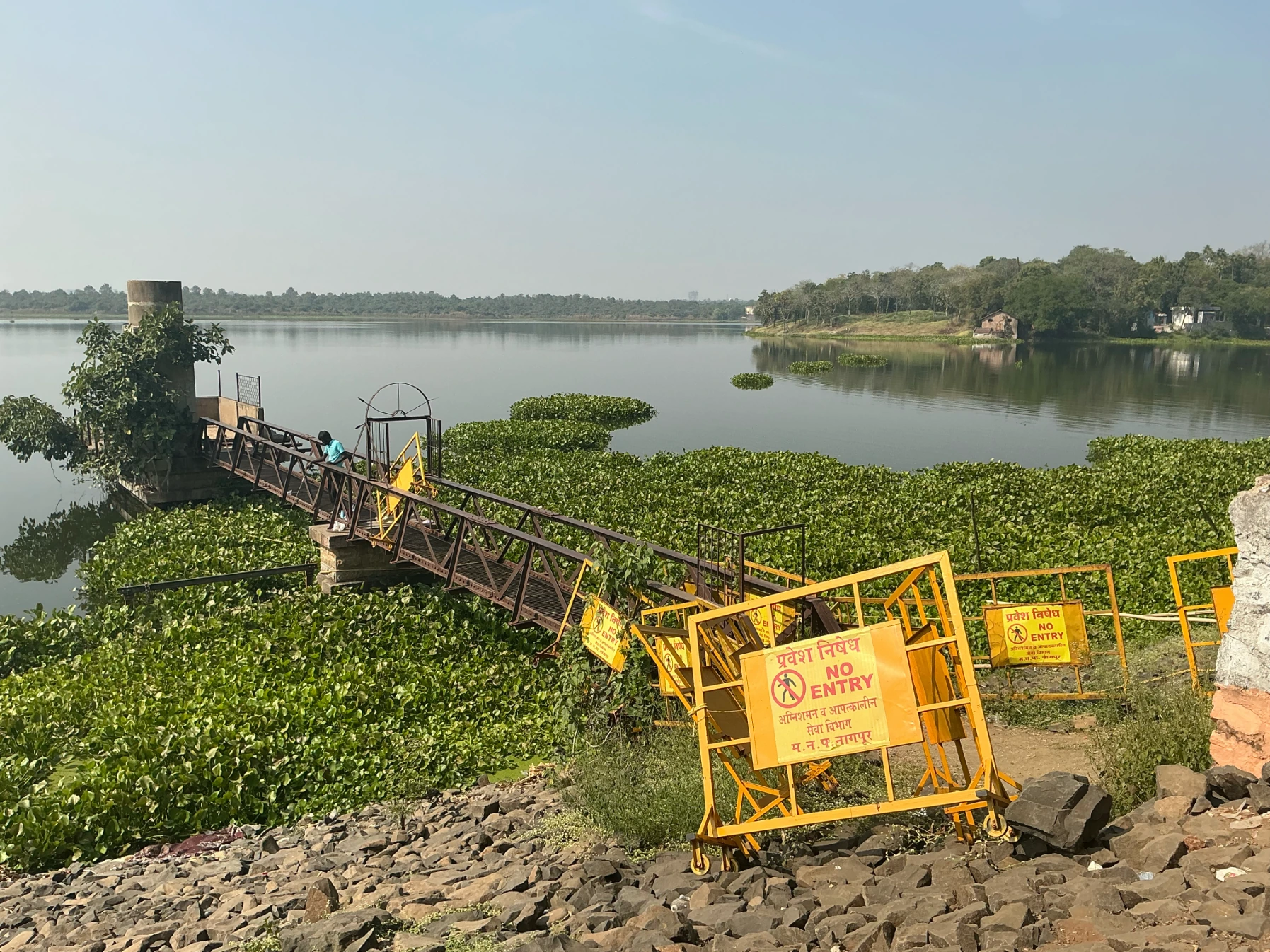
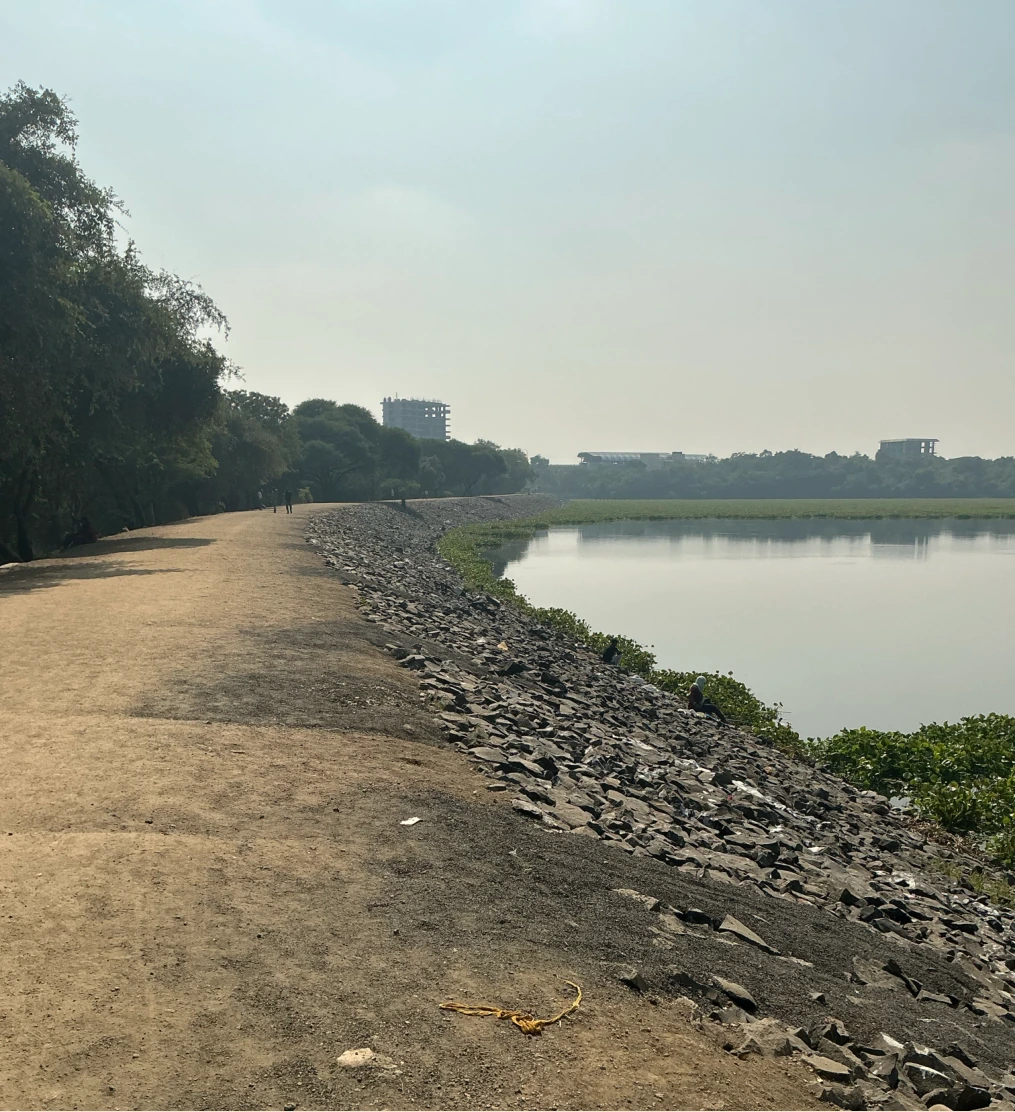
आता अंबाझरीभोवती लोखंडी कुंपणं आहेत, पाणी दिसतं पण स्पर्श होत नाही। जिथे धुणं होतं, तिथे आता चालण्याचे रस्ते आहेत, आणि आरशात अडकलेलं पाणी शहराला परत पाहतं। पण पाऊस पडला की कुंपणं पाण्याला थांबवू शकत नाहीत। अंबाझरीत साठलेलं पाणी हळूहळू आपली वाट शोधतं, बांध ओलांडतं, नाल्यांमधून पुढे जातं आणि नाग नदीच्या प्रवाहात मिसळतं। जिथे शहराने रेषा आखल्या, तिथे पाणी त्या पुसत जातं। अंबाझरी आता फक्त तलाव नाही— तो नाग नदीपर्यंत जाणारा पावसाचा एक श्वास आहे। रेषा स्थिर नाहीत, त्या पावसासोबत बदलतात, आणि पाणी शहरासाठी नाही— ते पुन्हा पुन्हा जमिनीशी जोडण्यासाठी वाहतं।
Historically, Ambazari functioned as far more than a water reservoir; it was a productive working landscape that sustained both livelihoods and settlement. Residents depended on the lake for their daily water needs, women gathered at the ghats to wash clothes, fishermen relied on its waters for their livelihood, and farmers used the stored water to irrigate nearby agricultural fields.By regulating monsoon runoff, recharging the surrounding landscape, and moderating seasonal flows entering downstream channels, Ambazari became the headwater reservoir of Nagpur's cascading lake system. Its enduring legacy lies not only in its engineering ingenuity but also in its central role in shaping the city's water infrastructure, economy, and relationship with the landscape.Today, Ambazari remains one of Nagpur's most recognizable lakes, although its role has shifted from water supply toward recreation, landscape management, and environmental conservation.
जिथे पाणी साठते, तिथे वस्ती वाढते।
Where water is stored, settlements grow.
फुटाळ्याच्या काठावर दुपार आणि संध्याकाळ एकत्र राहत होते। कपडे धुतले जायचे, घागरी भरल्या जायच्या, पूजा आणि विसर्जन व्हायचं— आणि माणसं एकमेकांना भेटायची। तलाव फक्त पाणी नव्हता, तो लोकांच्या जगण्याचा भाग होता।
If Ambazari supplied water to the city, Futala supplied public life. Located closer to dense residential areas, Futala's significance was shaped less by water storage and more by everyday social activity. Residents used the water for bathing, washing clothes, fishing, and household needs, but the lake also served as a place of gathering and cultural exchange.Religious ceremonies frequently took place along its edge. Festivals, immersion rituals, and seasonal celebrations brought communities together around the water. Informal social interactions occurred throughout the day, making the lake a central component of neighbourhood life.
Unlike highly engineered reservoirs, Futala's importance emerged through repeated patterns of use. The shoreline functioned as a shared public realm where work, leisure, ritual, and social interaction overlapped. Urban redevelopment during the late twentieth and early twenty-first centuries transformed the lakefront. Paved promenades, lighting systems, food stalls, and recreational facilities altered both the appearance and use of the lake.Today, Futala is one of Nagpur's most visited public spaces. Activities that once depended directly on water have largely disappeared, replaced by walking, sightseeing, and tourism.
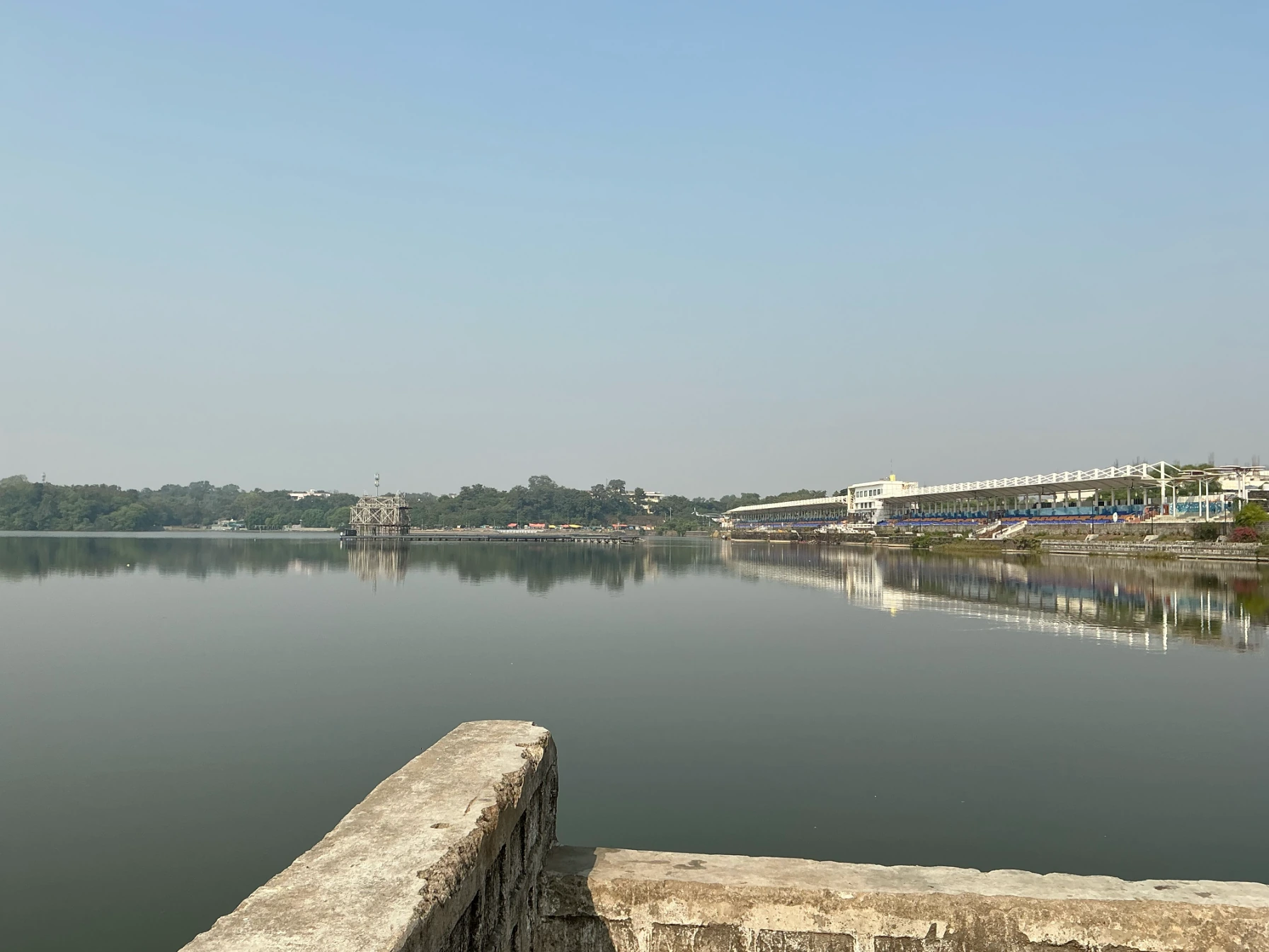
आता फुटाळ्याच्या काठावर दिवे आहेत, पक्के रस्ते आहेत, लोक अजूनही येतात— पण पाण्यासाठी नाही, फिरण्यासाठी आणि पाहण्यासाठी। दिव्यांच्या प्रतिबिंबात तलाव अजूनही दिसतो, पण पाणी जवळ असूनही माणूस त्याच्यापासून दूर झाला आहे।
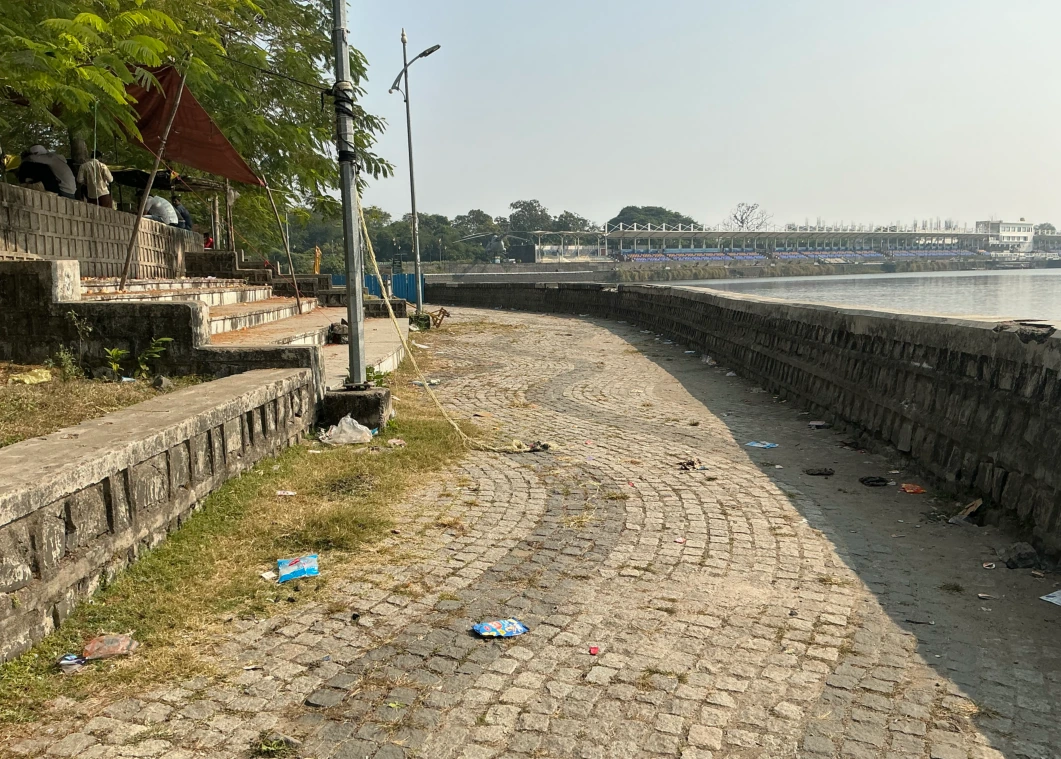
जंगल, पाणी आणि जमीन — निसर्गाची त्रिवेणी ।
Forest, water, and land — nature's confluence.
गोरेवाड्याच्या जंगलात पाणी शांतपणे साठत होतं। ओल्या मातीवर गुरांच्या पाऊलखुणा, झाडांच्या सावलीत पक्ष्यांचे आवाज— पाणी आणि जंगल एकमेकांत मिसळलेले होते।
Gorewada Lake developed under different conditions. Located on the northwestern edge of the city and surrounded by forested terrain, it remained relatively insulated from intensive urbanization for much of its history. Historically, the area around Gorewada supported grazing, seasonal agriculture, and small-scale fishing. Human activity was present but generally less intensive than around Ambazari or Futala. The relationship between people and water was therefore more seasonal and productive than urban.
The surrounding forests, wetlands, and open lands allowed ecological processes to remain visible. Bird populations, aquatic vegetation, and wildlife habitats continued to depend upon the lake and its catchment. In recent decades, Gorewada has gained importance as an ecological resource within the expanding metropolitan region. Conservation initiatives and nature-based recreation have reinforced its role as a landscape where environmental processes remain central. Among Nagpur's major lakes, Gorewada provides perhaps the clearest example of how water storage, biodiversity, and landscape conservation can coexist.
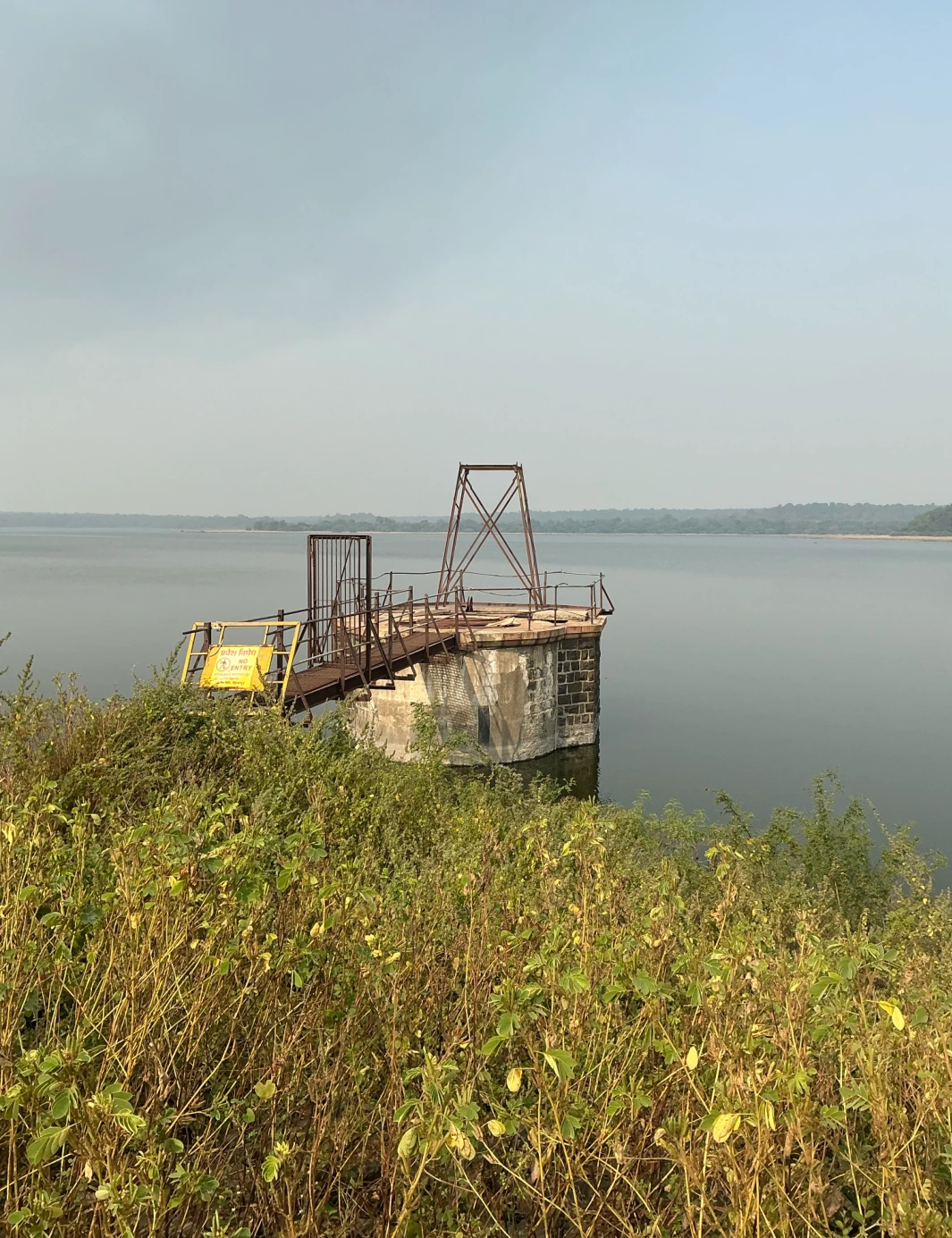
आता गोरेवाडा संरक्षित आहे, माणूस इथे येतो पाहुण्यासारखा। पाणी अजूनही आहे, जंगल अजूनही आहे, पण माणसाचं नातं निसर्गापासून दूर झालं आहे. पाऊस आला की जंगल पुन्हा जागं होतं, माती पाणी धरून ठेवते, आणि छोट्या प्रवाहातून पाणी पुढे सरकतं। शहराच्या रेषा संपतात तिथे पाण्याची वाट सुरू होते— तलावातून, जमिनीतून, आणि पुढे वाहत जाणार्या त्या मोठ्या प्रवाहाकडे।
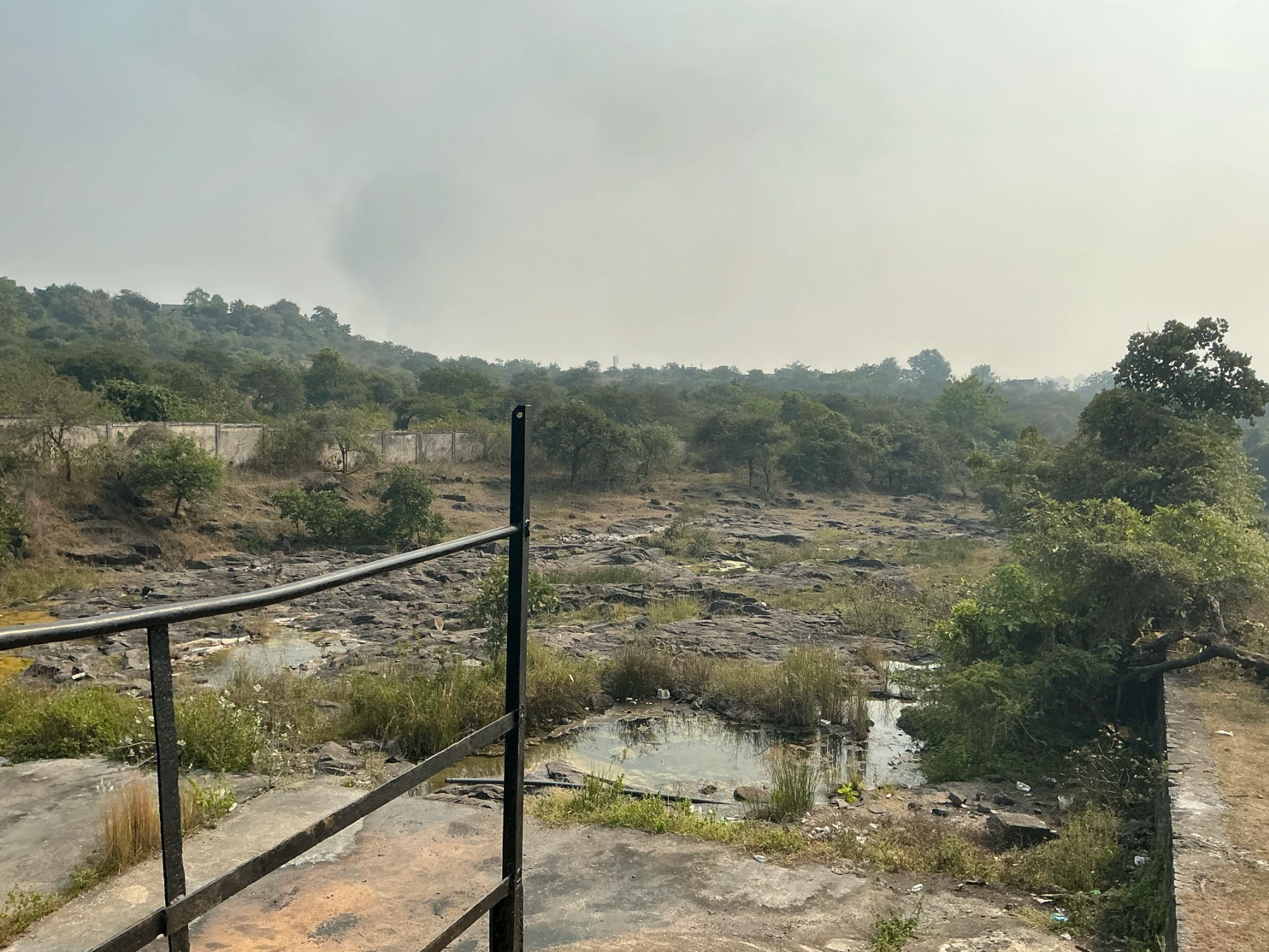
एक थेंब नदी बनतो, नदी संस्कृती घडवते.
One drop becomes a river, and a river shapes a civilization.
Although Ambazari, Futala, and Gorewada developed different identities, they are part of the larger water landscape of Nagpur. Ambazari shows the importance of water storage and supply, Futala shows how water became a social and cultural space, while Gorewada represents the ecological side of the city's water landscape.
The Nag River becomes an important connecting thread in this system. Rainwater moves through the natural slopes, streams and drainage channels of the watershed, connecting different parts of the city. Ambazari's overflow and surrounding drainage contribute to the upstream water network, while the Nag River carries water further through the city. In this way, the river is not only a water channel but also a record of how Nagpur has grown around its water. Together, the lakes and the Nag River show how water shaped settlements, agriculture, infrastructure, public life and ecology. Their importance is therefore not only in their individual histories, but in how they work as parts of one larger landscape.
एक थेंब पडतो, मातीला जाग येते, आणि पाणी आपली वाट शोधू लागतं अंबाझरीत ते थांबतं, फुटाळ्यात आठवणी बनतं, गोरेवाड्यात झाडांच्या सावलीत श्वास घेतं। तीन तलाव, तीन वेगळ्या गोष्टी— पण पाण्याची वाट एकच आहे.पावसाच्या रेषांमधून नाले वाहतात, जमीन ओलांडतात, आणि पुढे नाग नदीत मिसळतात।
नाग नदी फक्त पाणी वाहत नाही, ती शहराच्या जुन्या आणि नव्या गोष्टी सोबत घेऊन जाते। जिथे काठ होते तिथे आता रस्ते आहेत, जिथे पाणी जवळ होतं तिथे आता भिंती आहेत। पण पाऊस आला की शहराच्या रेषा विरघळतात— अंबाझरी, फुटाळा, गोरेवाडा आणि नाग नदी पुन्हा एकाच प्रवाहात जोडले जातात.पाणी थांबत नाही, ते फक्त आपली वाट बदलतं।